

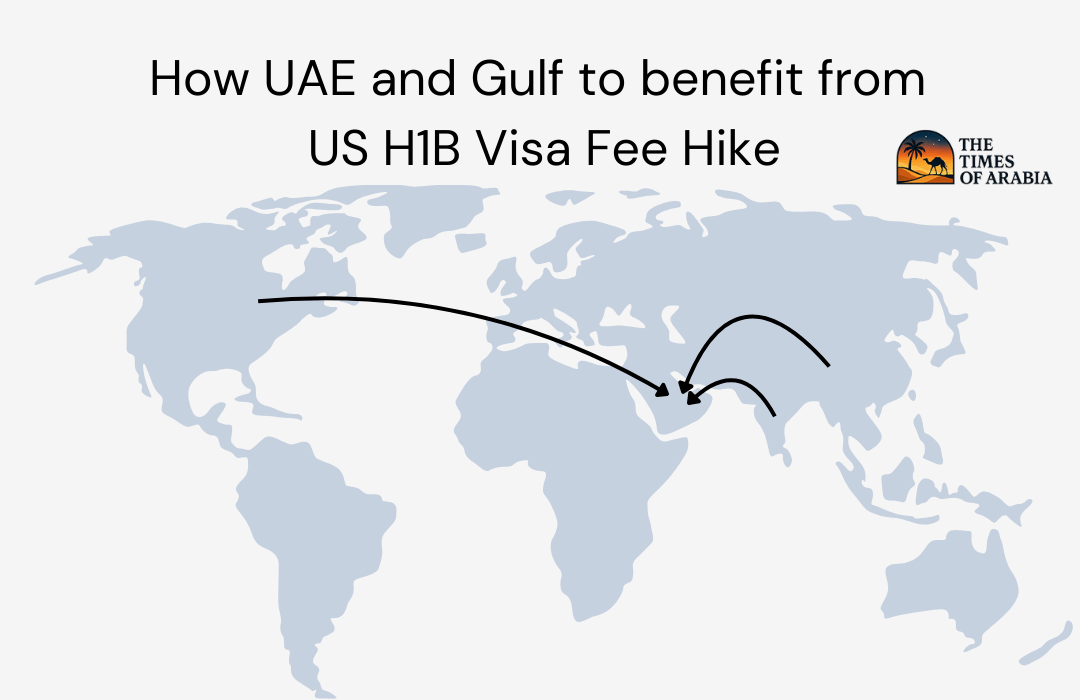
Sep 21, 2025 – In a move that has sent shockwaves through the global tech industry, the United States has slapped a jaw-dropping $100,000 one-time fee on every new H-1B visa petition. The proclamation, signed by U.S. President Donald Trump on September 19, has left Indian IT giants, aspiring tech migrants, and Silicon Valley employers reeling. However, there has been a lot of confusion and legal ambiguity about exactly who and when the new fee applies.
Who gets affected (and how hard)?
- Employers sponsoring new hires abroad / first-time H-1B beneficiaries:
- If an employer wishes to bring in a worker from overseas under H-1B for the first time (i.e. new petition), they must pay the $100,000 extra — a massive cost jump from prior ranges.
- Many of these new petitions were historically used by Indian IT firms, outsourcing or consulting firms, and U.S. tech companies hiring globally.
- Startups, mid-sized firms, and outsourcing consultancies with thin margins
- Experts warn that large firms (Big Tech) may absorb or pass along the cost; smaller firms / contractors may struggle.
- The new cost may make it uneconomical to sponsor some roles, especially lower-margin or client-billed outsourcing jobs.
- Indian IT / outsourcing sector
- India has traditionally been the largest supplier of H-1B professionals. In 2024, Indians received ~71 % of approved H-1B visas.
- The Indian government and industry have already expressed concern about disruption to services exports and remittances.
- Estimates suggest Indian IT firms may incur $150–$550 million additional cost in aggregate due to this hike.
- Foreign nationals seeking new U.S. employment under H-1B
- Many aspiring professionals who had planned to move to the U.S. via H-1B may find costs prohibitive or their chances reduced.
- Those already in the U.S. under valid H-1B or renewing or changing employer may not be directly affected, under current interpretation.
- U.S. tech / industries dependent on skilled immigrant labor
- The U.S. may lose competitiveness in certain sectors that rely on global talent — aside from cost, the high barrier may discourage applicants. Experts warn about impact on growth, innovation.
- Some estimates (JPMorgan economists) suggest the hike could reduce ~5,500 H-1B work authorizations per month.
Why Dubai can become a strong beneficiary
Dubai is well positioned to benefit (indirectly) from disruption in the U.S. H-1B regime. Here’s how and why:
- World-Class Infrastructure: Dubai offers high standards of living to its citizens and residents with world-class state-of-the-art infrastructure, unmatched global connectivity through its modern airports, smart logistics, free zones, and advanced urban systems, making it an ideal base for skilled professionals, corporations and high net-worth individuals and families.
- Booming Hub for Tech, AI & Innovation: With government-backed AI initiatives, thriving startup ecosystems, and a strong presence of global tech giants, Dubai is rapidly becoming a magnet for techpreneurs, entrepreneurs, innovators and aspiring H-1B candidates seeking opportunity outside the U.S.
- Alternative global IT / outsourcing hub: Many Indian tech / consulting companies already have significant presence in the Dubai and other GCC cities like Doha and Riyadh. As the U.S. becomes more expensive, their operations may shift or expand more aggressively in Dubai and other major cities in GCC.
- Lower Taxes: UAE and GCC economies are geographically well-connected and having favorable business and tax environments, is already a favored regional hub for global IT, digital, and outsourcing services.
- Talent retention / relocation: Skilled professionals who had ambitions to go to the U.S. may now instead choose to base themselves in Dubai (UAE), Qatar and Saudi Arabia for global remote roles, with occasional travel rather than full relocation.
- UAE Golden Visa and Long-term Residency Options: UAE’s policy of openness to foreign talent (e.g., Golden Visa, long-term residency, attractive quality of life) becomes more attractive when U.S. opportunities face dramatic cost barriers.
- Attracting diaspora / Indian talent directly: UAE (and other GCC nations) may actively position themselves as a more stable, lower-risk destination for Indian tech talent. Many Indians already living in UAE or nearby may prefer to remain rather than take U.S. visa risks.
- Boost to regional tech ecosystems: A reorientation of talent and capital flows may lead to increased investment in UAE’s tech / innovation ecosystem (startups, accelerators), since more professionals will choose to stay or relocate regionally rather than go to the U.S.
While the U.S. closes doors, Dubai is rolling out the red carpet and emerging as the “open alternative” — a place where Indian techies, startups, and service firms can base themselves, still serving clients in the West, but without the barriers.